What if the rise of the Antichrist does not begin with one powerful man suddenly appearing on the world stage? What if Scripture tells us to watch for something that comes first—a group of rulers already working together before he ever takes control? Pastor Nelson Walters argues that Daniel gives us exactly that pattern, and recent Middle Eastern alliances may help Christians understand why the question “who are the 10 kings in Daniel 7” matters so much.
The Ten Kings Come Before the Antichrist
Walters begins with Daniel 7:24: “The ten horns out of this kingdom are ten kings that shall arise.” He connects those ten horns with the ten-horned beast described later in Revelation.
Revelation 12 pictures Satan with ten horns. Revelation 13 shows the beast with ten horns. Revelation 17 again describes ten kings who eventually give their authority to the beast.
The important point, Walters says, is the order.
The Antichrist does not appear first and then create the ten-king alliance. Daniel says another horn rises after the ten. So the ten rulers must already exist in some form before the final ruler becomes dominant.
That changes what prophecy watchers should be looking for.
Instead of constantly trying to identify the Antichrist, Walters believes Christians should first watch for the political structure from which he eventually arises.
Could a Sunni Alliance Become the Ten Kings?
Walters points to a reported defense agreement involving Saudi Arabia, Turkey, and Pakistan. In his interpretation, these countries bring very different strengths to an alliance: Turkey has military power, Saudi Arabia has wealth and energy resources, and Pakistan possesses nuclear weapons.
He argues that all three are also Sunni-majority Muslim nations, while Iran represents the competing Shia power center.
That Sunni-Shia divide becomes important in his proposed scenario.
If more Sunni states threatened by Iran were eventually drawn into the same defensive structure, Walters suggests countries such as the United Arab Emirates, Qatar, Bahrain, Kuwait, or Syria could become possible additions.
Could that eventually produce ten rulers?
Walters does not say it definitely will. He repeatedly describes this as something to watch rather than something Christians should declare fulfilled.
His larger argument is that if the ten kings were beginning to form, an expanding regional alliance could look something like this in its earliest stages.
How the Antichrist Rises From the Ten
Daniel 7 describes a “little horn” rising among the ten horns.
Walters identifies this figure with the final Antichrist and connects the passage with Revelation 17:13, where ten kings eventually give their authority to the beast.
That suggests an unexpected route to power.
The future ruler may not begin as the most important leader in the alliance. Walters believes he could first appear as a smaller political figure who rises among established rulers. Eventually, the ten give him greater authority.
Daniel also says three of the horns are uprooted.
Walters believes that detail may explain why an alliance that begins united could later fracture. He points specifically to Turkey and Saudi Arabia, noting that in his interpretation of Ezekiel 38 they eventually appear on different sides of the Gog-Magog conflict.
So whatever unity exists early on may not last.
Daniel 8 and a Coming War With Iran
Walters then connects the ten-king discussion with Daniel 8.
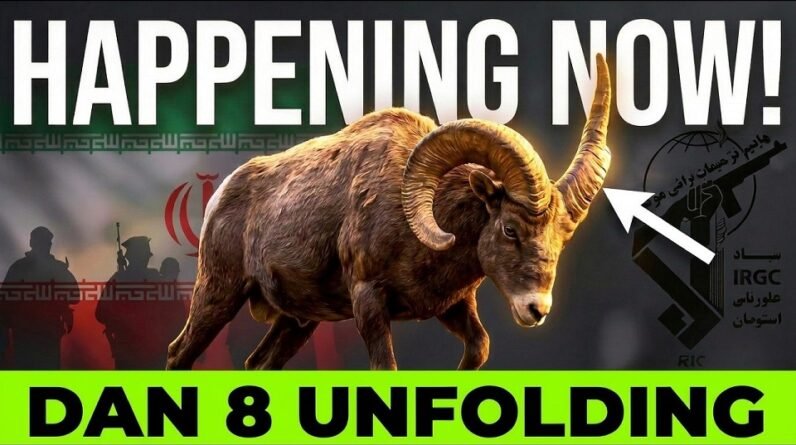
Daniel sees a goat attack a ram identified with Media and Persia. Walters interprets Persia as modern Iran and argues that the Hebrew term Yavan points to a region associated especially with western Turkey and the area around the Bosphorus.
Historically, the prophecy was fulfilled through Alexander the Great’s conquest of Persia. But Walters argues Daniel 8:17-19 points toward an additional end-times fulfillment.
Under that interpretation, a future coalition connected with the Yavan region could attack Iran.
He suggests a Turkey-centered alliance might therefore serve two prophetic roles: it could resemble the beginning of Daniel’s ten-king structure while also becoming the force represented by Daniel’s goat.
Again, he treats this as a possibility rather than a certainty.
Watch, But Don’t Pretend to Know
So, who are the 10 kings in Daniel 7?
Walters’ answer is that Scripture identifies their role more clearly than their modern names. They are ten rulers who form before the Antichrist rises, create the governing structure from which he emerges, and eventually surrender authority to him.
That means Christians should be careful about naming them too early.
Jesus said in Matthew 25:13, “Watch therefore, for you know neither the day nor the hour.” Walters believes watching means paying attention when political movements begin resembling the order Scripture describes, without pretending every headline is definite fulfillment.
And there is a practical purpose behind that watching.
For Walters, prophecy is not supposed to produce panic or endless speculation. If these developments really are moving toward the events Daniel described, then Christ’s return is closer. That should move believers toward spiritual readiness, faithful obedience, and sharing the Gospel while there is still opportunity.
The point is not simply to identify ten kings.
It is to be ready for the King who comes after all earthly kingdoms have run their course.
Stay Alert with Revelation Explained
Biblical prophecy with current events, stay alert to these potential end-time signs at Revelation Explained.
Stay Informed with Nelson Walters
Last Days Overcomer Website – https://lastdaysovercomer.org/about-us/

Learn more about Tom Cote and Watchman River
Thanks for watching Who are the 10 Kings in Daniel 7? at Revelation Explained.