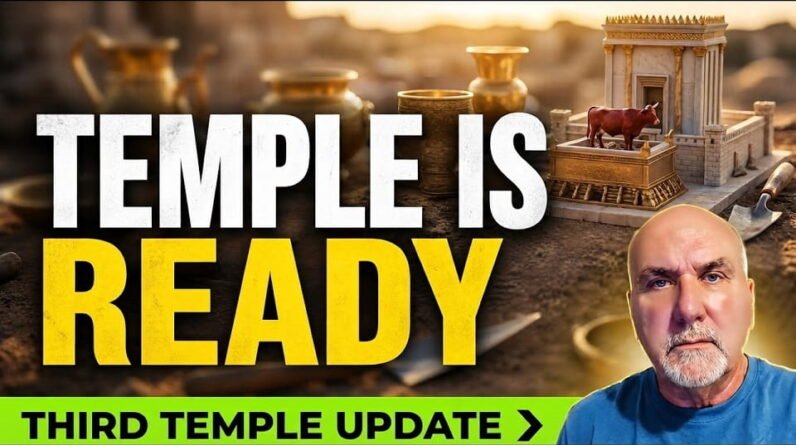
What if a man claiming religious authority in Israel is more important than his failed political campaign suggests? A little-known figure has entered Israeli politics using the Hebrew name of Jesus and a title associated with the promised Messiah. He has also reportedly made claims about divine authority and expressed interest in serving in a future Jewish temple. So, is the false messiah here, or are Christians seeing another example of the deception Jesus warned about? Bible teacher Nelson Walters examines the unusual story of Yeshua Israel Ben David and its possible connection to end-times prophecy.
Who Is Yeshua Israel Ben David?
According to Walters, Yeshua Israel Ben David is an Israeli political figure associated with a movement called Gan Eden, which means Garden of Eden.
His biography reportedly describes a man born in Lithuania in 1988 who grew up in Galilee and now lives in Jerusalem. He has studied the Hebrew Bible, New Testament, Quran, and other religious traditions.
But Walters is especially interested in his name.
Yeshua is the Hebrew name for Jesus. Israel is the name God gave Jacob. And Ben David means Son of David, a title closely connected with the promised Messiah.
In Matthew 21:9, the crowds welcomed Jesus into Jerusalem as the Son of David. The title points back to God’s promise in 2 Samuel 7 that David’s royal kingdom would endure forever.
Walters believes using these names together raises important questions about Ben David’s religious ambitions.
A Political Campaign With Religious Implications
Ben David’s Garden of Eden movement reportedly promotes peace, economic reform, debt relief, and a digital shekel.
Those proposals are not necessarily connected with Bible prophecy. However, Walters believes some could eventually support the kind of economic control described in Revelation 13.
He also points to unusual religious symbolism surrounding the movement.
During the election process, Ben David reportedly requested ballot letters associated with God’s divine name. Israeli election officials rejected the request.
He also reportedly appeared wearing a high priest’s breastplate, similar to the one described in Exodus, containing twelve stones representing Israel’s tribes.
Walters says Ben David has expressed interest in serving as a priest in a future Third Temple.
His political campaign failed. But Walters believes the election may have been more about attracting attention than winning office.
The Organizational Chart That Raises Questions
One of the most unusual claims involves an organizational chart reportedly connected with Ben David.
According to Walters, the chart places God at the top, followed by the Holy Spirit. Below that appears Ben David himself, positioned above several religious and political authorities.
These reportedly include the Sanhedrin, the 144,000, the Order of Melchizedek, and international governing bodies.
Walters finds this especially troubling because the chart allegedly places Ben David above someone identified as the First Yeshua.
Could that mean Ben David considers himself a second appearance of Jesus?
Walters cannot confirm the document’s full meaning or authenticity. Still, he believes its claims deserve investigation.
The reference to Melchizedek is also significant.
Genesis 14 identifies Melchizedek as a priest of God Most High. Psalm 110:4 speaks of a priest forever according to his order, a passage the New Testament applies to Jesus.
Walters wonders whether Ben David is proposing a new priestly authority outside the traditional Levitical priesthood.
What Did Jesus Warn About False Messiahs?
Walters turns to Matthew 24:4-5, where Jesus warns His disciples not to be deceived because many will come in His name.
This warning comes before Jesus discusses wars, famines, earthquakes, and other end-times events.
That order matters.
According to Walters, spiritual deception is one of the first dangers Christians should expect as the end times approach.
He also references John 5:43, where Jesus warns that another will come in his own name and be accepted.
Walters believes these passages raise serious questions about anyone claiming authority that belongs to Jesus Christ alone.
But he makes an important distinction.
Someone displaying messianic ambitions is not automatically the Antichrist. Scripture warns that many false messiahs and deceivers will appear.
Could Miracles Change Everything?
Walters believes the most important development to watch would be the appearance of extraordinary miracles.
Right now, Ben David remains a relatively unknown figure whose political campaign was unsuccessful.
But what if he began performing signs that appeared impossible to explain?
Walters points to biblical warnings about supernatural deception during the end times. He believes Satan could empower a false religious leader to perform convincing signs that draw large numbers of followers.
That could change how people view someone previously dismissed as an unusual political figure.
Walters is not claiming Ben David possesses supernatural powers. His concern is what could happen if such signs appeared.
The Antichrist, the Third Temple, and Worldwide Worship
Second Thessalonians 2:3-4 describes the man of lawlessness exalting himself and taking his seat in God’s temple, proclaiming himself to be God.
Walters connects this passage with reports that Ben David has referred to himself as the Almighty and expressed interest in the Third Temple.
These claims remain unverified in the transcript, and Walters does not identify him as the man of lawlessness.
Instead, he asks whether Ben David’s ambitions resemble the type of religious authority Scripture warns against.
Revelation 13 adds another important element: worldwide worship.
Walters emphasizes that the final deception will involve more than politics or economic systems. It will involve people giving worship and divine authority to someone other than the true Christ.
A digital currency alone is not the Mark of the Beast. Neither is a political movement advocating peace.
The central issue is worship, deception, and the demand for allegiance.
Is the False Messiah Here?
Walters concludes that Christians should watch developments involving Ben David without rushing to identify him as the Antichrist.
His name, religious symbolism, political ambitions, and reported claims about divine authority deserve attention. But they do not establish that he is the final false messiah described in Scripture.
The greater concern is whether a religious figure could eventually gain widespread acceptance through convincing signs and claims of supernatural authority.
For Christians asking, “Is the false messiah here?” Walters offers a reminder.
Jesus did not tell believers to identify every unusual religious leader as the Antichrist. He warned them to recognize deception, understand Scripture, and remain faithful to Him.
The best protection against a counterfeit messiah is knowing the real Jesus Christ.
And that remains the most important lesson, regardless of what happens next in Israel.
Stay Alert with Revelation Explained
Biblical prophecy with current events, stay alert to these potential end-time signs at Revelation Explained.
Stay Informed with Nelson Walters
Last Days Overcomer Website – https://lastdaysovercomer.org/about-us/
Thanks for watching Is the False Messiah Here? at Revelation Explained.